
Plant operations
What a useful CBG operating review should contain
A daily and weekly review structure that links biological performance, machinery reliability, gas losses and commercial output.
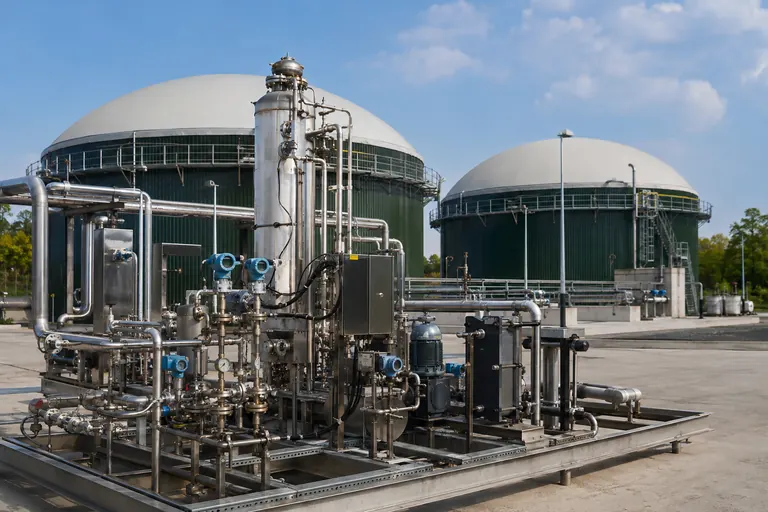
Follow the production chain
An operating report should make it possible to follow material from reception to saleable gas and digestate. A single daily CBG tonnage does not explain whether the plant is improving. Feed quantity and condition, biological conversion, gas recovery, equipment availability and dispatch all influence the final number.
Use a fixed reporting boundary and period. Mark estimated readings and instrument failures. Keep maintenance, flaring and off-spec events against the same timeline so that a production change can be explained rather than merely recorded.
Daily: establish what changed
The shift record should capture feed by material, recipe changes, relevant laboratory results, temperatures, raw-gas quantity and composition, equipment stops and gas-holder behaviour. It should also record who authorised operating changes and why.
A daily review is a short operating conversation: what changed, what is outside the plant's established limits, which actions are in progress and what needs escalation. It is not an opportunity to impose generic numerical thresholds copied from another feedstock or process.
- Record abnormal conditions and the responsible person's response.
- Separate confirmed measurements from estimates.
- Reconcile gas generated, processed, flared and dispatched where measurements permit.
- Track open safety and reliability actions through closure.
Weekly: investigate losses and repeat failures
Review specific electricity and consumable use against a consistent output basis. A higher kWh/kg value can result from reduced output even when the equipment's absolute consumption is unchanged. Investigate numerator and denominator before assigning the cause.
Repeated pump blockages, media changes, analyser faults or compressor trips need a cause review. The maintenance plan should distinguish temporary restoration from a lasting corrective action. Spares and specialist availability should be checked before the planned outage.
Measure improvement over comparable conditions
Worked example: a plant using 6,000 kWh/day at 3,000 kg/day has a simple site intensity of 2.0 kWh/kg. If output falls to 2,400 kg/day with the same electricity use, intensity becomes 2.5 kWh/kg. This illustrative change does not by itself prove that a motor became less efficient.
For each improvement, define the expected outcome, measurement method and review period. Maintain the authorised operating and safety limits throughout the trial. A useful management report ends with decisions, owners and dates, supported by a short explanation of the evidence.
Evidence & further reading
Source material
- US EPA AgSTAR: Anaerobic Digester/Biogas System Operator Guidebook
- IEA Bioenergy Task 37: Process monitoring in biogas plants
- IEA: Key issues affecting biogas and biomethane projects
Technical references inform the discussion. Final design, operating limits and policy eligibility depend on the project and applicable current documents.