
Gas systems
Match gas storage to the plant's operating hours
How to connect continuous gas production with shorter upgrading shifts, maintenance interruptions and the usable range of a gas holder.
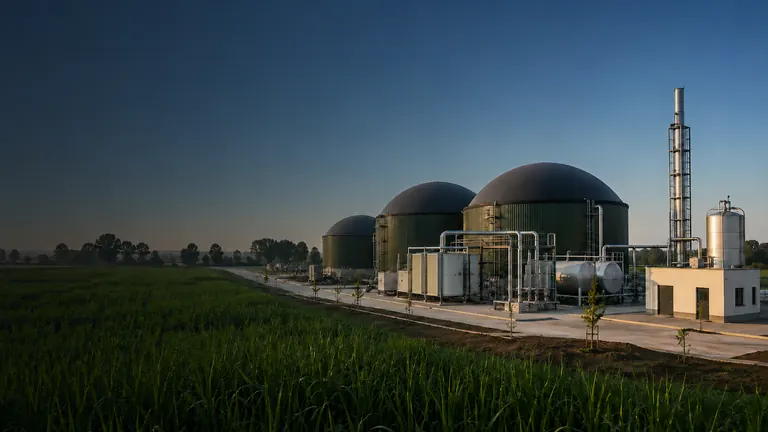
Production and processing follow different clocks
Biological gas generation continues when a purification skid or compressor is stopped. If downstream equipment operates for fewer than 24 hours, the plant must manage the gas produced outside that window. Increasing the upgrading skid's hourly rating does not remove the need for a buffer.
Start with an hourly balance of production, consumption and storage. Include the intended start time, processing rate, turndown and expected stoppages. The highest cumulative surplus identifies the working storage duty for that particular schedule.
Use a transparent worked balance
Worked example: assume constant generation of 10,000 Nm³/day, equivalent to about 417 Nm³/hour. If upgrading runs for 18 hours at about 556 Nm³/hour, the six-hour stop accumulates 2,500 Nm³. During the operating window, the net draw from storage is about 139 Nm³/hour. Over 18 hours, that draws down the same 2,500 Nm³.
This simplified balance assumes uniform production, immediate full-rate processing and no losses or downtime. Actual holder sizing needs a time profile, usable level range, control thresholds and justified contingencies. Normalised gas volume must be converted to the holder's actual temperature and pressure basis.
Distinguish nominal from usable capacity
A gas holder is not usually operated from completely empty to its maximum geometric volume. Control limits, pressure requirements and manufacturer restrictions define its usable range. Those limits should appear in the gas balance and operating philosophy.
The installation also needs suitable anchoring or support, pressure and vacuum protection, condensate management and maintainable instrumentation. A low-pressure membrane holder is not a high-pressure transport cascade; their roles and approval requirements are different.
Plan what happens when the buffer is full
Storage only provides time. It does not provide an unlimited response to unavailable upgrading, compression or demand. The plant must have an approved method of handling surplus gas and a clear response to high or low storage conditions. This should be considered in the controls and safety review.
Review the balance again when feeding patterns, upgrading shifts or dispatch arrangements change. A schedule that balances on an average day may fail during maintenance or when the gas buyer cannot accept product.
- Plot hourly generation and processing on the same gas-volume basis.
- Specify the usable buffer separately from the nominal holder volume.
- Check scheduled and credible unscheduled interruptions.
- Keep gas storage, pressure protection and emergency response as separate design requirements.
Evidence & further reading
Source material
- US EPA AgSTAR: Anaerobic Digester/Biogas System Operator Guidebook
- US EPA AgSTAR: Project Development Handbook
Technical references inform the discussion. Final design, operating limits and policy eligibility depend on the project and applicable current documents.